In your workshop, you're mid-project and realize you're out of copper foil tape. Your eyes land on a roll of kitchen aluminum foil. It's metal, it's conductive—could it work as a quick substitute?
The short answer is: Sometimes, but rarely well. While both are metallic sheets, aluminum foil and conductive copper tape are engineered for fundamentally different purposes. Using foil where copper tape is specified can lead to failed prototypes, intermittent connections, or even safety issues.
Let's break down why, and when you might—or definitely should not—make the swap.
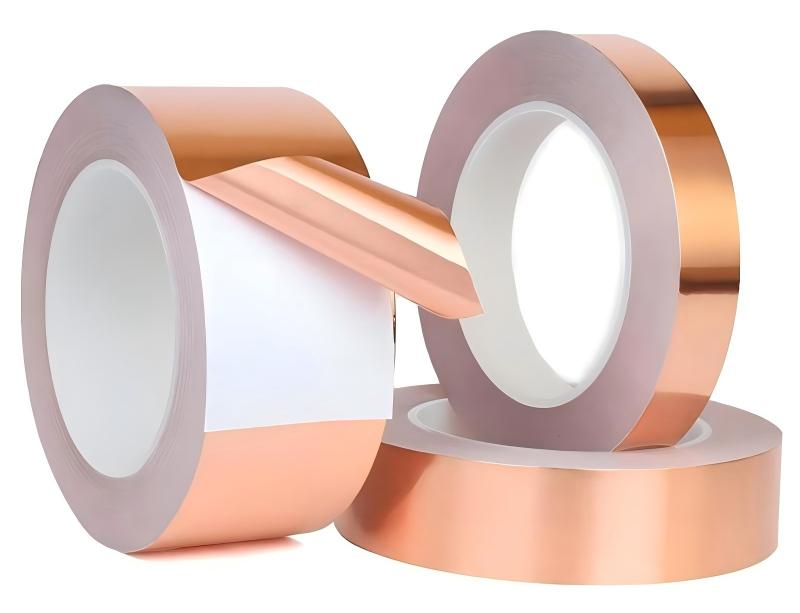
At first glance, swapping one shiny metal for another seems logical. But in practice, the differences are substantial:
| Property | Copper Tape (with Conductive Adhesive) | Aluminum Foil (Standard Kitchen Grade) |
| Conductivity | Excellent. Copper is one of the best conductive metals, ideal for circuits and shielding. | Good, but not as good as copper. More electrical resistance means potential signal loss or heat. |
| Solderability | Yes. You can solder components directly to most copper shielding tape. | No. Aluminum is very difficult to solder without specialized equipment and flux. |
| Oxidation | Forms a conductive oxide. Connections remain stable over time. | Forms a non-conductive oxide layer (alumina). This can block electrical contact and cause failures. |
| Adhesion | Has a pressure-sensitive conductive adhesive backing for instant, reliable bonding. | No adhesive. Requires glue, which is typically non-conductive and creates an insulating layer. |
| Durability | Relatively strong, tear-resistant, and can be formed into shapes without cracking. | Very thin and fragile. Tears easily, kinks permanently, and is hard to work with precisely. |
| Primary Use Case | Electrical circuits, EMI/RFI shielding, grounding straps, craft electronics. | Cooking, wrapping food, insulation, and occasionally as a quick-fix heat reflector. |
There are a few niche, non-critical scenarios where foil could serve as a desperate, temporary stand-in:
1.Blocking Radio Frequency Interference (RFI): In a pinch, crumpled foil can create a crude Faraday cage to block signals. But for consistent EMI shielding, proper copper shielding tape with its continuous conductive adhesive is vastly superior.
2.Heat Reflection: For a non-electrical application like reflecting heat away from a component, aluminum foil or a dedicated High Temp Aluminum Tape (designed with a proper adhesive) would be more appropriate than copper.
3.Aesthetic or Craft Projects: If conductivity doesn't matter, and you just need a metallic look, foil works.
Crucial Caveat: Even in these cases, remember that foil has no built-in adhesive. Using regular glue creates an insulating barrier, defeating the purpose for any electrical application.
For any project where performance, reliability, or safety matters, copper foil tape is the only correct choice. This includes:
• Creating Circuit Boards or Paper Circuits: The conductive adhesive is key here. Copper Foil Tape With Conductive Adhesive allows you to create working electrical connections just by sticking it down.
• EMI/RFI Shielding in Enclosures: Effective shielding requires a continuous, low-resistance conductive layer that makes solid electrical contact with the chassis. Copper shielding tape is designed for this.
• Grounding Applications: A secure, long-term, low-resistance ground path is critical. Copper's stability and solderability make it reliable; aluminum's oxidation makes it risky.
• Repairing or Shielding Cables: The flexibility and durability of conductive copper tape allow it to wrap neatly around cables without tearing.
• Any Solder Connection: If you need to attach a wire or component, you must use solderable copper tape.
Opting for foil to save a few dollars on a project can cost you more in the long run:
• Time: Troubleshooting intermittent failures caused by poor conductivity or oxidation.
• Money: Wasted components damaged by poor connections or heat buildup.
• Reputation: A prototype that fails during a demo or a product that malfunctions in the field.
Using the right material from the start is always the most efficient path.
At QKD, we understand that material choice is the foundation of a product's reliability. For over 15 years, we've been engineering specialized tapes for demanding applications. Our 15,000㎡ vertically integrated production base gives us precise control, allowing us to tailor the properties of our copper foil tape—from the purity and thickness of the foil to the formulation of the conductive adhesive.
Whether you need a standard copper shielding tape or a High Temp Aluminum Tape for thermal management, our OEM/ODM services ensure you get a tape engineered for your specific requirement, not a generic compromise. Our products are backed by ISO 9001 certification and comply with UL, IEC, CE, and RoHS standards, providing confidence for both prototyping and mass production.
Think of aluminum foil as duct tape and conductive copper tape as a precision-engineered electrical connector. Both have their place, but they are not interchangeable for critical tasks.
For a one-time, non-critical, non-soldered experiment where failure is acceptable, foil might work.
For any project requiring a reliable electrical connection, shielding integrity, solderability, or long-term stability, investing in the right copper foil tape is non-negotiable.
Need help selecting the right conductive tape for your application? Contact QKD for technical specifications and samples tailored to your project's real-world demands.


