When engineers need to shield a sensitive circuit from electromagnetic interference (EMI), they often picture metal enclosures or conductive coatings. But what about those tight spaces, flexible components, or extreme temperatures where traditional solutions won't fit? This is where a specialized material steps in: polyimide tape.
Often recognized by the brand name Kapton tape material, standard polyimide electrical insulation tape is famous for its incredible heat resistance. However, when engineered with a conductive layer, it transforms into a powerful, lightweight, and flexible tool for managing EMI. Let's explore how this works and where it's indispensable.
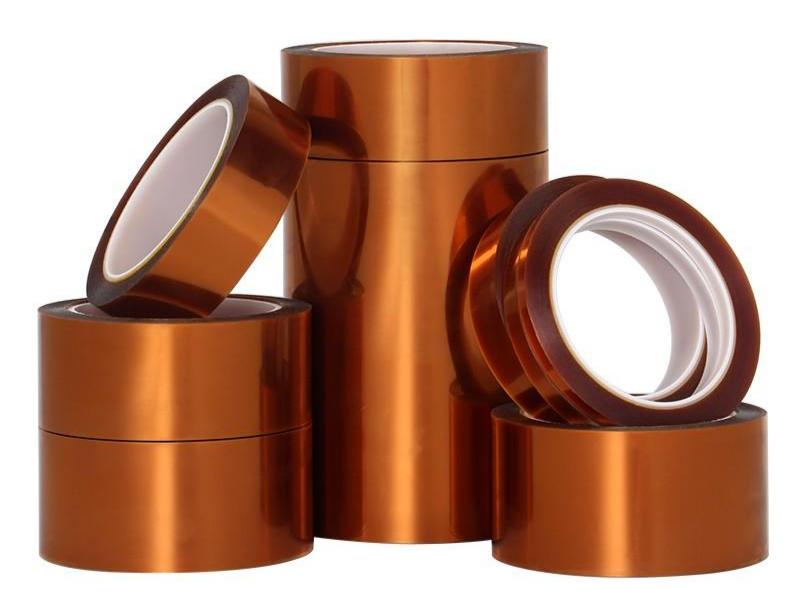
At its core, polyimide film electrical tape is an exceptional insulator. The base polyimide film is what gives it strength and the ability to withstand temperatures from -269°C to over 400°C. By itself, it blocks electricity but does little to stop electromagnetic waves.
The shielding capability comes from a critical addition: a conductive layer. Manufacturers apply this layer to one or both sides of the polyimide film through processes like vacuum metallization, sputtering, or laminating a thin metal foil (often aluminum or copper).
This creates a hybrid material with a "Jekyll and Hyde" personality:
•The Polyimide Side: Provides mechanical strength, thermal stability, and flexibility.
•The Conductive Side: Creates a continuous, low-resistance surface that reflects and absorbs electromagnetic energy, creating a Faraday cage effect.
Its unique combination of properties makes it the go-to choice for several challenging applications:
1.Flexible Electronics & Displays: In modern foldable phones, curved displays, and wearable tech, circuits need to bend. Standard metal shields can't. A thin layer of conductive polyimide tape can be applied directly to flex cables or display components, providing EMI shielding that moves with the device without cracking.
2.High-Tensity Environments: Many electronics live in hot places—near engines, power supplies, or LEDs. A polyimide tape with a conductive coating can shield sensitive sensors or circuits in these areas, where ordinary conductive tapes with acrylic backings would melt or degrade.
3.Aerospace & Avionics: Weight is critical, and conditions are extreme. This tape offers a high shielding-effectiveness-to-weight ratio and can handle the thermal cycling and vacuum conditions of space, protecting critical flight electronics.
4.Grounding & Static Dissipation: In addition to full shielding, it's perfect for creating grounded paths on non-conductive surfaces or for safely draining electrostatic charges in assembly processes, preventing damage to sensitive components.
5.Prototyping & Niche Applications: Even hobbyists and engineers use it for polyimide tape for 3D printing bed surfaces (for its heat resistance and smooth finish) or in custom electronics projects where a thin, heat-resistant shield is needed. The conductive versions add another dimension to these uses.
Not all conductive polyimide tapes are equal. When evaluating options, look beyond the polyimide tape label and check:
•Surface Resistivity: Measured in ohms per square (Ω/sq). A lower number means better conductivity and generally better shielding performance. Values can range from >10⁶ Ω/sq for static dissipation down to <1 Ω/sq for heavy shielding.
•Conductive Layer Material: Aluminum is common and cost-effective for general shielding. Copper offers superior conductivity for critical applications but may oxidize.
•Adhesive Type: Is it conductive too? A conductive adhesive ensures electrical continuity through the tape, crucial for grounding. A standard acrylic adhesive provides only mechanical hold.
•Temperature Rating: Ensure both the polyimide film and the adhesive are rated for your operating environment.
Creating a reliable conductive polyimide tape is a exercise in precision. The shielding performance depends entirely on the uniformity and integrity of that micron-thin conductive layer.
As an experienced polyimide tape manufacturer, QKD tackles this challenge through vertical integration and process control. Our 15+ years of expertise in polymer science is applied from the very first step in our 15,000㎡ facility.
Here's what sets the process apart:
1.Film Excellence: We start with high-purity polyimide film, ensuring it has the intrinsic thermal and chemical stability needed as a foundation.
2.Precision Metallization: The conductive layer is applied under tightly controlled conditions. Whether through vacuum deposition or lamination, we monitor the process to achieve a perfectly uniform coating with no weak spots or pinholes that could compromise the shield.
3.Adhesive Synergy: We don't just slap on any adhesive. We formulate or select an adhesive that complements the application—whether it needs to be thermally conductive, electrically conductive, or simply provide a tenacious, high-temperature bond.
This level of control from raw material to finished roll is why our manufacturing system is ISO 9001 certified and our products meet UL, IEC, CE, and RoHS standards. For clients facing unique challenges, our OEM/ODM service allows us to engineer solutions—adjusting the thickness of the conductive layer, the type of metal, or the adhesive system to create a polyimide tape that meets exacting shielding, thermal, and mechanical requirements.
Standard polyimide electrical insulation tape is a workhorse for heat and insulation. When engineered with a conductive layer, it becomes a specialized shield—one that is thin, lightweight, flexible, and incredibly tough.
It won't replace a heavy-gauge steel enclosure for blocking intense interference. But for protecting electronics that must be light, must bend, or must survive in an oven-like environment, it is often the only material that can do the job effectively. When your design is pushed to the limits of space, weight, and temperature, conductive polyimide tape provides an elegant and reliable line of defense.
Need a shielding solution that can handle heat, tight spaces, or constant flexing? Contact QKD to discuss how our engineered conductive polyimide tapes can be tailored to protect your most critical designs.


